
Emerald Ash Borer FAQ's and Information
1. What Is Emerald Ash Borer?
The Emerald Ash Borer (EAB), Agrilus planipennis, is an invasive wood-boring beetle originally from Asia that attacks and kills Ash trees. EAB has spread throughout most of North Texas and is now considered a major threat to both residential and commercial landscapes.
Adult beetles are metallic emerald-green to coppery-green and approximately 1/3–1/2 inch long. This stage emerges from Ash trees during the summer, leaving small 1/8” “D”-shaped exit holes in the trunk and branches. The adults feed on Ash tree foliage and lay eggs in small cracks in the bark.
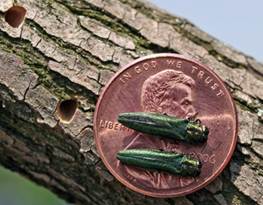
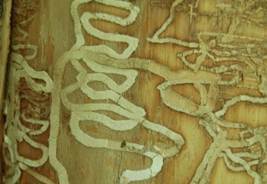
The microscopic EAB eggs hatch in 7-10 days and immediately bore into the tree. The larvae grow up to 1.5” long and leave distinct “S”-shaped tunnels under the bark, feeding on cambial tissue until fall. The first-year larvae overwinter in the tree and begin feeding again the next spring.
While the adults feed on leaves, the real damage is caused by the larvae feeding beneath the bark, disrupting the tree’s ability to move water and nutrients.
2. Is EAB a Threat in North Texas?
Yes. As of 2026, EAB has been confirmed in nearly all counties across North Texas and continues to spread rapidly.
The Emerald Ash Borer (EAB, Agrilus planipennis) is an invasive pest originating in Asia that has made its way through most of the Dallas/Fort Worth Metroplex. The first sighting in the metroplex was in Harrison County in 2016, and the beetle quickly spread over many counties.
Current infestation maps:
- https://www.aphis.usda.gov/plant-pests-diseases/eab/eab-infestation-map
- https://texasagriculture.gov/Regulatory-Programs/Plant-Quality/Pest-and-Disease-Alerts/Emerald-Ash-Borer·
Because winter temperatures in North Texas are typically not cold enough to kill overwintering first-year EAB larvae inside the tree, Emerald Ash Borer populations tend to be more aggressive and destructive here than in many northern states.
3. Is Preventative Treatment Important?
EAB can kill an Ash tree in less than one growing season once infestation begins. Preventative treatment is the most effective way to preserve healthy trees.
Research has shown that properly trunk-injected Ash trees can maintain:
- 98–99% canopy retention
- Protection for up to 2 years
- Significantly improved long-term survival
Trees with more than 40–50% canopy loss are much less likely to recover.
4. What Is the Recommended Treatment?
The most effective treatment for EAB is trunk injection using Emamectin Benzoate. This method of treatment has shown a 99% efficacy rate for up to 2 years after treatment.
How It Works
- Insecticide is injected directly into the root flare of the tree during the growing season.
- The product moves through the vascular system of the tree.
- Feeding larvae and adult beetles ingest the product and die.
Treatment Benefits
- Highly effective against active infestations
- Long-lasting protection
- Minimal environmental exposure compared to soil applications
- Proven efficacy in heavily infested areas
There are trunk sprays and soil applied insecticides also labeled for EAB management. These may help prevent EAB damage, but they have significantly less efficacy and do not last as long.
5. How Often Are Treatments Needed?
Treatment intervals vary depending on:
- Tree size
- Tree condition
- Infestation pressure
- Arborist recommendations
Your consulting arborist will determine when retreatment is needed but most Ash trees require retreatment every 18–24 months. Some trees may remain protected for up to 36 months under certain conditions but skipping treatment may allow EAB to infest the tree once the insecticide is no longer active.
6. What are the Signs of an Emerald Ash Borer Infestation?
Watch for these common symptoms:
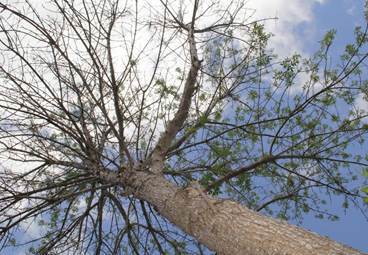
- Dead branches in the upper canopy
- Thinning or declining foliage
- Bark splitting
- Distinct “S”-shaped galleries under the bark
- Small 1/8-inch “D”-shaped exit holes
- Excessive water sprouts along the trunk or branches
- Rapid canopy decline
7. Is Early Action Important?
Trees severely damaged by EAB often become hazardous and expensive to remove. In many cases, preventative treatment costs less than removal and replacement.
Healthy trees also provide valuable benefits:
- Increased property value
- Shade and reduced cooling costs
- Improved air quality
- Carbon sequestration
- Enhanced landscape appearance
8. Can I Transport the Firewood from My Ash Tree?
Never transport Ash firewood from infested areas. EAB larvae can survive inside cut wood and spread the infestation to new locations.
Always follow state and local quarantine guidelines regarding firewood movement.
Additional Information
While researchers continue studying biological controls for EAB, there are currently no commercially available biological treatment options with proven effectiveness comparable to trunk injection using Emamectin Benzoate.
For the best chance of preserving Ash trees, proactive monitoring and preventative treatment are strongly recommended.
For more information on EAB: Search EAB | Arborilogical.

About the author
Arborilogical Services, Inc.
Arborilogical Services, Inc. shares information and news about trees, tree maintenance and the tree industry. Arborilogical is the expert tree care company your trees deserve.